
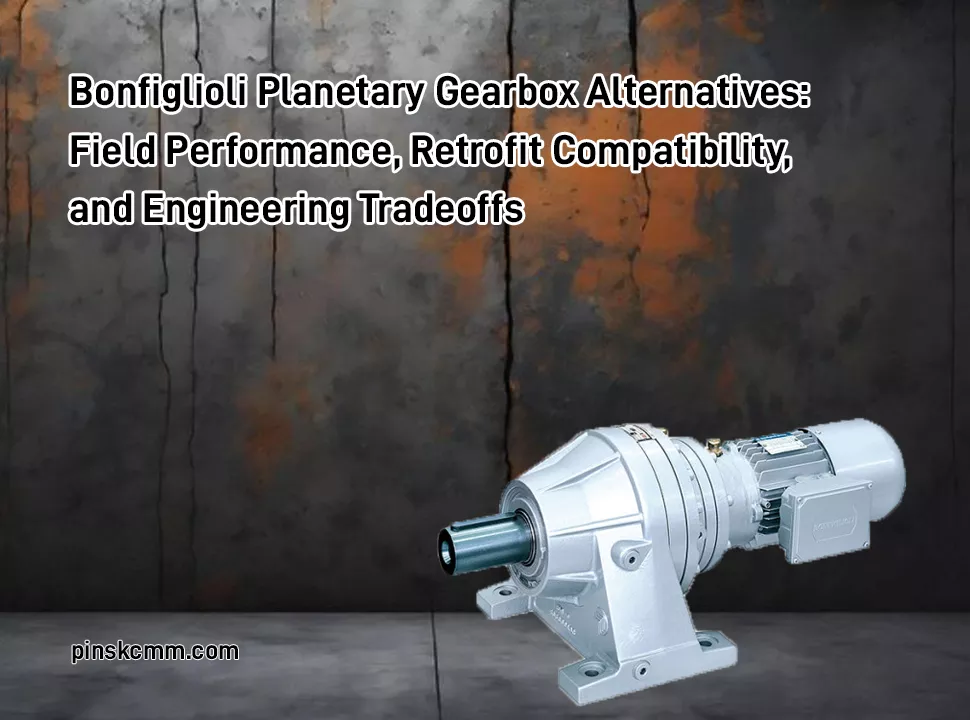
Planetary gearboxes play a defining role in uptime, energy efficiency, and mechanical stability across heavy industries. In sectors such as cement, mining, energy, and marine, these gear systems are not auxiliary components—they determine whether production remains continuous under high torque and cyclic load conditions.
Bonfiglioli planetary gearboxes have long served as a benchmark in compact high‑torque transmission. However, evolving operational demands and global supply constraints have driven engineers to evaluate technically compatible alternatives through measurable performance criteria rather than brand tradition alone.
Why Engineers Evaluate Alternatives to Bonfiglioli Planetary Gearboxes
Modern production lines operate under higher duty cycles, tighter maintenance windows, and increasing pressure to reduce lifecycle cost. In this context, gearbox selection decisions increasingly revolve around:
- Verified torque performance
- Long‑term efficiency under full load
- Lead time predictability
- Shock load endurance
- Lifecycle energy consumption
These factors influence not only equipment reliability, but also operational risk and maintenance planning.
Planetary Gearbox Architecture and Heavy‑Duty Suitability
Planetary gear systems distribute torque across multiple gear meshes simultaneously, reducing tooth stress and improving fatigue resistance. This architecture delivers superior torque density while maintaining compact dimensions—an essential requirement when retrofitting existing machinery without structural modification.
Compared to parallel‑shaft designs, planetary gearboxes provide improved stiffness, reduced deformation under load, and stable performance in continuous‑duty environments.
Field Performance Comparison: Industry‑Referenced Data
Rather than revisiting theoretical descriptions, industry evaluations increasingly focus on measurable field outcomes. The following performance factors are commonly referenced by engineers when comparing Bonfiglioli planetary gearboxes with compatible alternatives available on the market:
- Torque capacity up to 1,200,000 Nm remains a standard expectation in large planetary assemblies.
- Mechanical efficiency consistently exceeding 95% under rated load.
- Lead time variability, which directly affects downtime risk during unplanned failures.
- Shock load durability, especially in start–stop and cyclic applications.
- Lifecycle energy consumption, which influences long‑term OPEX.
Field data comparisons indicate that modern planetary platforms engineered for heavy industry can meet or exceed these benchmarks while addressing supply chain and availability constraints.
Buyer Impact of Performance Differentiation
From a buyer’s perspective, performance differentiation is less about catalog features and more about operational outcomes:
- Reduced exposure to extended downtime
- Lower energy usage over extended operating cycles
- Improved tolerance to shock loading
- Faster recovery during maintenance or breakdown events
Within the broader gearbox manufacturing landscape, planetary platforms from multiple suppliers—including manufacturers such as SEAWIDE—are evaluated side by side with established European units based on these criteria rather than brand positioning alone.
Application Context Across Heavy Industry
In cement plants, planetary gearboxes drive kilns, clinker conveyors, and bucket elevators under abrasive conditions and sustained loads.
In mining and bulk material handling, torque peaks and shock loads dominate gearbox design considerations.
In water and wastewater treatment, low‑speed torque stability directly impacts process continuity and regulatory compliance.
In marine and energy sectors, compact torque‑dense systems reduce structural stress and improve long‑term reliability.
Across these environments, retrofit suitability and field‑proven endurance carry more weight than nominal catalogue ratings.
Engineering Tradeoffs in Retrofit Decisions
When replacing a planetary gearbox, engineers must weigh:
- Dimensional compatibility (shaft, flange, bolt patterns)
- Thermal limits under continuous duty
- Lubrication strategy and cooling behavior
- Bearing life expectations under cyclic load
Proper evaluation ensures that performance improvements do not come at the cost of integration risk or premature wear.
As industrial systems continue to scale in power density and operational intensity, planetary gearbox replacement has shifted from brand‑based selection to evidence‑based engineering evaluation. Assessing Bonfiglioli planetary gearbox alternatives through objective field performance, lifecycle efficiency, and retrofit compatibility enables engineers to modernize drivetrain systems while maintaining reliability and operational resilience.
