
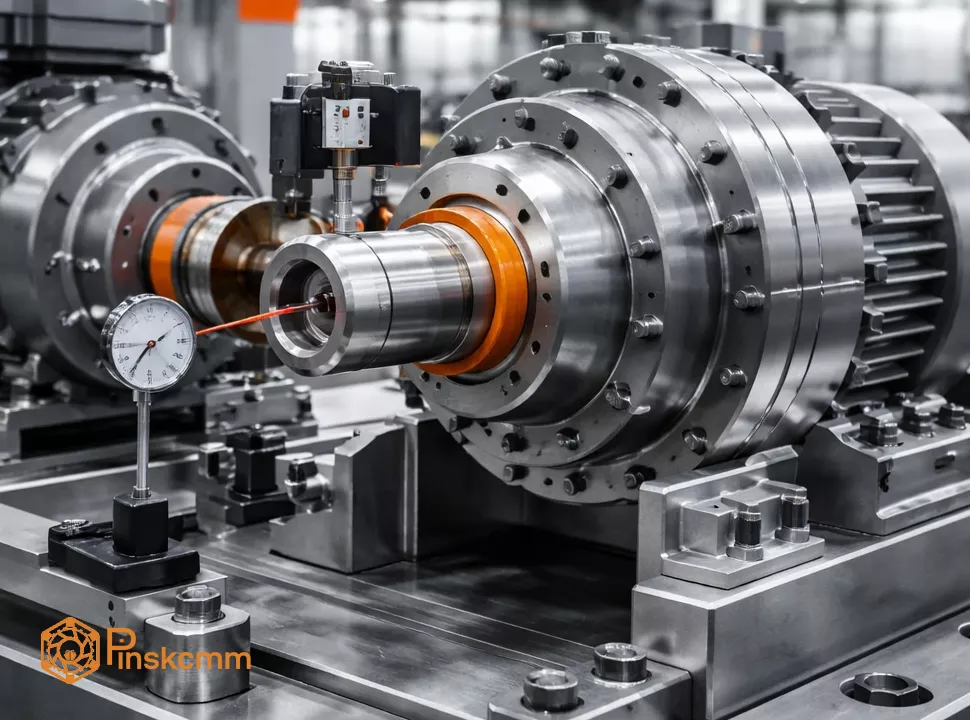
Planetary Gearboxes: Installation‑Critical Reliability Considerations
Planetary gearboxes are widely applied in modern industrial machinery due to their compact architecture, high torque density, efficient load sharing, and favorable power‑to‑volume ratio compared with parallel‑shaft and bevel gear reducers. Their epicyclic configuration enables torque transmission through multiple planet gears simultaneously while maintaining a coaxial input‑output arrangement, resulting in high torque capability within constrained installation envelopes.
From a mechanical engineering standpoint, the load‑sharing principle inherent to planetary gear systems reduces localized tooth and bearing stresses. Distributing torque across multiple planet gears allows higher allowable torque ratings, reduced component size, and improved torsional stiffness. These characteristics make planetary gearboxes particularly suitable for precision motion control, high‑duty cycle applications, and environments with frequent load reversals.
Despite their robust internal design, planetary gearboxes remain precision assemblies manufactured to tight dimensional, geometric, and tribological tolerances. Achieving expected operational performance—torque capacity, efficiency, backlash stability, noise emission, vibration behavior, and thermal balance—depends not only on design quality, but critically on correct installation and commissioning.
Incorrect mounting, misalignment, improper fastening, or unsuitable lubrication can introduce abnormal stress states that exceed original design assumptions. Under such conditions, even high‑quality gearboxes may experience accelerated wear and premature failure.
Installation‑Related Failure Mechanisms
Improper installation is consistently identified as a dominant root cause of early planetary gearbox failure across multiple industries. Typical installation‑induced issues include:
- Shaft misalignment beyond permissible tolerances
- Distorted or uneven mounting interfaces
- Incorrect bolt tightening methodology or torque values
- Inappropriate, contaminated, or insufficient lubrication
- Excessive radial or axial loads applied to the output shaft
These conditions commonly result in accelerated bearing fatigue, uneven gear tooth contact, increased friction losses, elevated operating temperatures, abnormal vibration signatures, and excessive noise. Over time, these effects significantly reduce service life and compromise system reliability.
In industrial practice, failures caused by installation errors are frequently misattributed to manufacturing defects. This misdiagnosis can lead to unnecessary replacement costs and warranty disputes. In reality, compliance with OEM installation instructions and engineering guidelines is a fundamental prerequisite for reliable operation and warranty validity.
Impact of Proper Installation on Gearbox Performance
Correct installation directly influences key operational parameters, including:
- Service life of gears, bearings, seals, and internal components
- Continuous and peak torque capability under real operating loads
- Load distribution and internal stress balance
- Mechanical efficiency and thermal behavior
- Noise emission, vibration levels, and motion smoothness
- Functional safety margins and long‑term system reliability
In demanding applications—such as conveyors, cranes, winches, mixers, extruders, rolling mills, robotics, and continuous‑duty production lines—even minor installation deviations can be amplified under cyclic or dynamic loading.
Pre‑Installation Verification
A structured pre‑installation phase is essential for minimizing downstream errors. Many installation‑related failures originate from incomplete preparation rather than errors during mounting itself.
Documentation Review
Before installation, all technical documentation must be reviewed, including:
- Installation and operation manuals
- Technical datasheets and dimensional drawings
- Lubrication and maintenance instructions
- Approved mounting orientations
Critical parameters requiring verification include rated and peak torque, service factor, permissible radial and axial loads, tightening torque values, and specified lubricant type and viscosity. Installation should not proceed if documentation is incomplete or ambiguous.
Visual Inspection
Each gearbox should be visually inspected prior to installation, regardless of delivery condition.
Inspection points include:
- Housing integrity and coating condition
- Shaft surfaces and keyways
- Seal positioning and condition
- Flatness and cleanliness of mounting faces
Nameplate data must be verified against engineering specifications to avoid installation of incorrect variants.
Mounting and Alignment Principles
Correct mounting and alignment are among the most critical aspects of planetary gearbox installation. Due to their high internal stiffness, planetary gear units are particularly sensitive to housing distortion and misalignment.
Output Shaft Installation
Components mounted on the output shaft must never be installed using impact loads or force. Approved installation methods include threaded pullers, hydraulic tools, or controlled thermal fitting. Post‑installation checks of concentricity and runout are strongly recommended to prevent cyclic bearing loading.
Motor Integration
For motor‑mounted configurations, flange compatibility, shaft positioning, and bolt tightening sequences must be carefully controlled. Motor mounting bolts should be tightened in a cross pattern using calibrated torque tools to avoid flange distortion.
When couplings are used, alignment must be maintained within specified angular and parallel tolerances to prevent excessive input bearing loads.
Radial and Axial Load Control
Planetary gearboxes are designed to withstand defined radial and axial load limits at the output shaft. Belt drives, chain drives, or rigid couplings can introduce loads exceeding permissible limits if not properly calculated.
Where calculated loads exceed allowable values, external bearing supports must be used. Uncontrolled axial loads are particularly damaging and often lead to rapid bearing and seal failure.
Fastening and Housing Integrity
Correct fastening ensures secure mounting without inducing internal stresses.
Best practices include:
- Using specified bolt strength grades
- Cleaning threads and contact surfaces
- Applying approved thread‑locking compounds where required
- Tightening bolts uniformly in cross patterns
Over‑tightening or uneven tightening can distort the housing and negatively affect internal gear alignment.
Lubrication Management
Lubrication quality directly affects wear protection, efficiency, and thermal stability.
Key considerations include:
- Using the specified lubricant type and viscosity grade
- Avoiding lubricant mixing
- Adjusting oil levels according to mounting orientation
- Ensuring breathers remain clean and unobstructed
Blocked breathers can cause internal pressure buildup, leading to leakage and seal failure.
Commissioning and Initial Operation
Commissioning should be performed in a controlled manner.
No‑Load Run
An initial no‑load run allows early detection of alignment or lubrication issues. Noise, vibration, and temperature trends should be closely monitored.
Gradual Load Introduction
Load should be increased incrementally while monitoring current draw, temperature, and vibration behavior. Fasteners should be re‑checked after initial operating hours.
Field experience from industrial projects, including planetary gearbox systems developed and commissioned by SEAWIDE, confirms that installation‑related issues remain one of the leading contributors to premature gearbox failure. Systematic adherence to alignment tolerances, fastening procedures, lubrication specifications, and staged commissioning has proven to be more critical to long‑term reliability than most design‑level variables.
Installation Error Prevention and Maintenance
Frequent installation‑related errors include misalignment, incorrect lubrication, excessive fastening torque, and unsupported loads. Systematic compliance with installation guidelines significantly improves long‑term reliability.
Post‑installation maintenance should include periodic inspection, lubricant monitoring, vibration analysis, and temperature trending. Early deviation detection enables corrective action before critical failure occurs.
Conclusion
Correct installation is a fundamental requirement for achieving the designed performance, efficiency, and service life of planetary gearboxes. By following disciplined installation procedures—from pre‑installation verification through commissioning and ongoing monitoring—industrial operators can significantly reduce failure risk and optimize total cost of ownership.
Proper installation is not a secondary task, but an integral part of engineered reliability in industrial drive systems.
